
‘Judge upholds legal rights of Street Spirit vendors’
In a ruling that upholds the rights of the vendors of Street Spirit, a Superior Court judge has thrown out the “panhandling” charges brought last fall against vendor Sheila Coleman.
Coleman was cited by an Oakland police officer in September 1995 while selling the paper outside De Lauer’s newsstand in downtown Oakland. She was charged under the 1957 law criminalizing panhandling. The fine is $270.
Street Spirit asked local civil rights attorney Osha Neumann to represent Coleman. Neumann, who works with Community Defense Inc., undertook the case on First Amendment grounds.
“Our position is that the ordinance is unconstitutional,” Neumann said. “People have a right to assemble on a public sidewalk. It’s an open public forum for gathering and speaking by citizens. There have already been U.S. Supreme Court cases saying that soliciting for charitable contributions is protected by the First Amendment.”
Coleman and Neumann challenged the ordinance first in Municipal Court by way of a demurrer, a legal objection to the ordinance itself on the grounds it was unconstitutional. “We were on the big cattle-call calendar at court,” Neumann said, “essentially a processing of people. You’re run through the system like meat through a meat-grinder. We came in with our demurrer, which was not working the way the system does. The judge was very uninterested and unsympathetic.”
The Municipal Court challenge was rejected by Judge Gifford in November 1995. But when the case was appealed to the Superior Court, the outcome was different.
On February 14, Superior Court Judge Larry Goodman upheld Coleman’s appeal, striking down the charges against her. Goodman did not deliver a written opinion stating his reasons. “But our appeal was based entirely on constitutional grounds,” Neumann said, and Goodman’s decision was validated by the appeal. “His finding was essentially that the law was unconstitutional.”
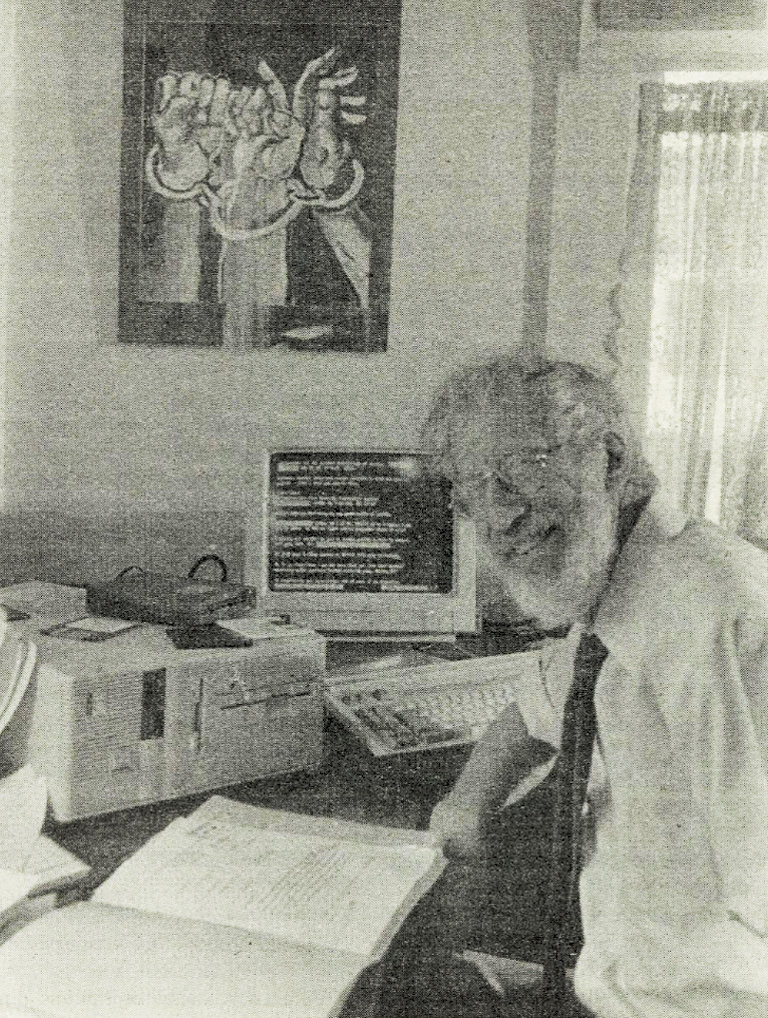
Neumann said that he is planning to inform the Oakland City Manager’s office of the decision, adding that he will “demand that they tell their police that this law is not to be enforced. There is so much value to the community to have a newspaper like Street Spirit, both to communicate, and as a means for people who would otherwise be panhandling to give something back to the community. It’s the kind of thing that people have said they want to happen. I would think they would want to encourage it.”
Wilson Riles Jr., Regional Director of the American Friends Service Committee (AFSC), which publishes Street Spirit, called the Superior Court ruling on Sheila Coleman’s case “a victory of sorts. Her civil rights have been guaranteed. But there is still a struggle over these issues. I would hope the city would change its policies to uphold civil rights.”
“I don’t believe it’s the policy of Oakland police to harass vendors,” Neuman continued. “But it’s the kind of thing that is left to the discretion of the individual officers, who take it upon themselves to ‘clean up the streets.’ They shouldn’t have that discretion, and under the constitution they don’t. Vendors should not have to deal with this fear.”
Neumann explained that vendors who ask people to buy a newspaper and panhandlers who ask for spare change both are protected under the First Amendment.
Neumann said, “A lot of content is communicated when a panhandler asks for money—why the money is being asked for, what the person’s condition is, something about the nature of society—so it is protected speech.”
What the Oakland law tried to do was restrict certain kinds of public speech, Neumann pointed out. “But discrimination according to the content of the speech is severely restricted. The government is not supposed to be in the business of deciding what sort of speech is okay.”
Alternative to Panhandling
Street Spirit was founded in 1995 to give homeless people a voice on important social issues like poverty, economic justice, and homelessness, and to enable vendors to earn a living and become self-sufficient. At a time when panhandling is under attack in Berkeley and Oakland, selling Street Spirit has provided homeless people with an alternative way to earn money while providing a positive community service.
Homeless vendors sell 18,000 copies of Street Spirit each month in Oakland and Berkeley. Vendors keep all proceeds from the sales.
Az Razzaq, who coordinates the vendor program, said that the paper “was originally designed as an alternative to panhandling. Sheila [Coleman] and Willie, her man, had been panhandling in Oakland until Street Spirit came along. They have been Street Spirit vendors and done excellent with their sales.”
Razzaq said that he believed the Superior Court judge’s ruling upheld the intent of the newspaper—that it is “justice news,” and that having vendors selling the paper on the street was a “fulfillment of Street Spirit’s mission.”
A Positive Contribution
Oakland City Manager Craig Kocian declined to comment on the specific case, saying that he was not yet familiar with the Superior Court decision. However, he expressed support of the Street Spirit, saying that he had purchased copies on occasion. “It definitely makes a positive contribution to the city,” he said.
Kocian said that the city’s only concern was that vendors maintain a “reasonable and positive attitude. The demeanor of the vendor is the main issue.” He further said, “We have tried to work with the Friends [AFSC] and the vendors in order to make selling Street Spirit entirely legal in Oakland.”
In response, AFSC’s Riles said that “Vendors are trained to be positive and respect the public. We are quite willing to work with the city concerning any vendors that are a problem. But we can’t work on this if the city’s policies are unclear.”
“The police have to be ordered to stop enforcing this law,” concluded Neumann. “As far as I know, the Oakland police are not independent of all civilian authority. They are under the city manager. The city manager and police chief can issue such an order, and should, and must.”
George Franklin’s story appeared in Street Spirit in March 1996.