Before everything changed, Jake was always in motion. A diesel mechanic by trade and a biker by passion, he spent his days fixing engines and his nights chasing the open road. Independent, stubborn, and loyal to a fault, he lived life on his own terms. His best friend, Greg, was always there, the kind of friend who could laugh with him endlessly and crack jokes, but would also show up the second he was needed.
I met Jake during that time. We fell hard and fast. Six months after we got together, he was shot in 2021. The injury left him paraplegic. Most people would have run from that kind of tragedy. I stayed. I was now not only his partner but his caregiver, helping him through hospital stays and the daily grind of recovery. I never left his side.
We fought to adapt, but violence ripples outward. Bills stacked up. Housing slipped away. One moment we had a roof. The next, we were living out of a vehicle, hoping it wouldn’t get towed.
Homelessness is brutal for anyone. For someone with Jake’s medical needs, it’s devastating. Living in a cramped truck without sanitary space or equipment, his health deteriorated. He developed infections that wouldn’t heal. Just recently, he lost one of his legs. Not from the shooting, but from living unhoused. That’s what people rarely see: homelessness itself steals health, dignity, and life.
Still, Jake hasn’t lost who he is. He jokes with nurses even when he’s not feeling up to it. He’s quick with sarcasm, stubborn as ever, and refuses pity. The same grit that once carried him through eight-hour shifts under a truck now keeps him alive in impossible conditions.
Seeking help has been its own maze. At Alameda County Social Services, we’ve waited hours in crowded rooms, only to be told to wait for a phone call that never comes. Outreach workers write down our names and disappear. Shelters are full. Housing programs say we don’t qualify—until we’re “more homeless” or “more disabled.” Each denial is another reminder that the system isn’t designed to catch you once you fall.
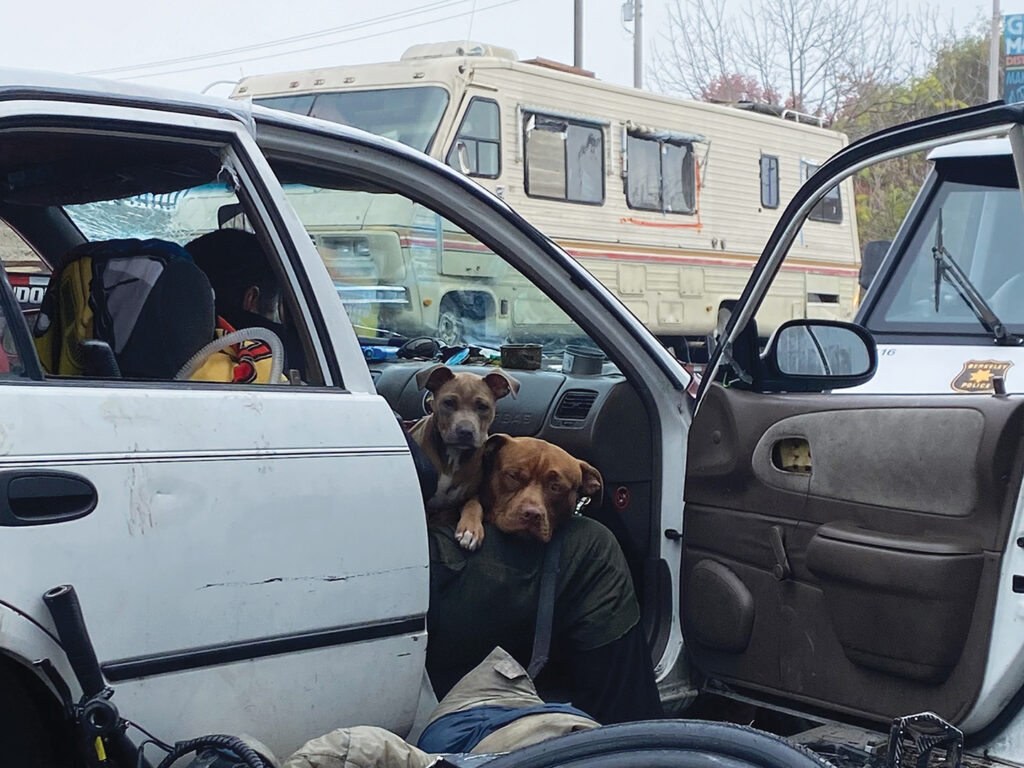
Meanwhile, our daily life is three adults and a dog crammed into a vehicle. Jake, Greg, me, and our dog Lil Bish sleep in rotations, shifting for space. Privacy doesn’t exist. Sleep is shallow. The air is heavy. Some nights we wake to footsteps outside, praying it isn’t the police or a tow truck.
Greg has been Jake’s best friend for years, long before the shooting. He stayed afterward, helping in ways most wouldn’t. Over time, he became my partner too. The three of us—plus Lil Bish—are a family. It’s not traditional, but loyalty and love run deeper than circumstance. We hold each other up when the system refuses to.
What we’ve learned is simple: our story isn’t unique. Thousands of people in the Bay Area are trapped in the same cycle. One tragedy—a shooting, an illness, a lost job—and the floor disappears. From there, the barriers to climbing back are endless. Disability makes survival harder. Homelessness makes disability worse. The two feed each other until dignity erodes.
Jake isn’t less of a man than he was before 2021. He is still generous, still stubborn, still my partner, and Greg’s best friend. But the system has treated him as disposable. His health has declined not just because of the violence he survived, but because of where the system left him.
Homelessness is not an individual failure. It is the failure of policies and priorities that let disabled people rot in parking lots while waiting lists for a home stretch for years. We deserve dignity. We deserve stability. Until housing and healthcare are treated as rights, not privileges, families like ours will keep surviving in the shadows—fighting to be seen as human.
Bryna Schaeffer is unhoused in Oakland, sharing her family’s fight for housing and justice.