I’ve spent most of my life dwelling in public spaces, so I feel uniquely qualified to speak about the commons.
I grew up in Santa Monica in the 1980s. My mom and I regularly visited neighborhood parks and—being a person who has always ventured off the beaten path—I stumbled across my share of homeless people in those parks, tucked away in some remote spot where most people would rarely see them. I was never assaulted or threatened. In fact, I don’t think any of them ever said a single word to me. These experiences helped to show me that people living outside are just people, minding their own business. The fact that they are living in public space doesn’t necessarily make them dangerous or strange.
When I became homeless myself in 1997, this lesson came into even sharper view. I lived on Telegraph Avenue. There were times when I would sleep in a doorway of a sympathetic neighbor’s garage with my partner, others I would sleep in an uninhabited building with a few friends, and still others when a large group of us would sleep right there on Telegraph Avenue.
We didn’t live in “encampments”—even if we spent the day at People’s Park, we slept elsewhere at night. That was when there were still many other places to stay, out of sight. But as the unhoused population grows, the number of places we can sleep shrinks. This makes homeless people more visible. Therefore, we are more noticeable to the rest of the public.
These days, homeless people live their lives with almost no privacy—forced to sleep, eat, wash, grieve, and even endure their worst mental health episodes entirely on display. This impacts some more than others.
For example, going through emotional stuff out in public presents a unique set of challenges. I’m not ashamed to feel my emotions, so when bad things have happened to me in my life, I was just crying everywhere. You’re walking down the street and you’re crying, you sit down in a park and you’re crying—you’re crying wherever you happen to be. But for those with paranoia issues, going through this stuff in public can compound their paranoia, because people start looking at them. It can be a vicious cycle—especially if they aren’t comfortable with expressing their emotions.
Psychologically, you have a choice to either toughen up or become paranoid and freaked out. I personally toughened up. I’m not going to not cry about my divorce, or my son being stolen from me, or my dog Ruby dying. But this might be a very uncomfortable and troubling experience for somebody else, which could lead to further internal troubles.
Compounding the challenges of this very visible existence is the judgment of the watchful public. But in reality, we all benefit from The commons in the same ways. We all need to use the library or free WiFi. We all want to be able to go out and eat at restaurants and cafes. We all want to sit at a park and relax and chat with friends. And unhoused people—like all people— want to do these things without being frowned upon, discriminated against, or shooed away. Or, in the bigger picture, legislated against.
Excluding us from these spaces doesn’t just harm homeless folks. When unhoused people are excluded, everybody loses. There is real benefit to people of all walks of life being able to associate with each other. So really everybody is losing out when folks of various income levels, housed or not housed, are unable to interact with each other.
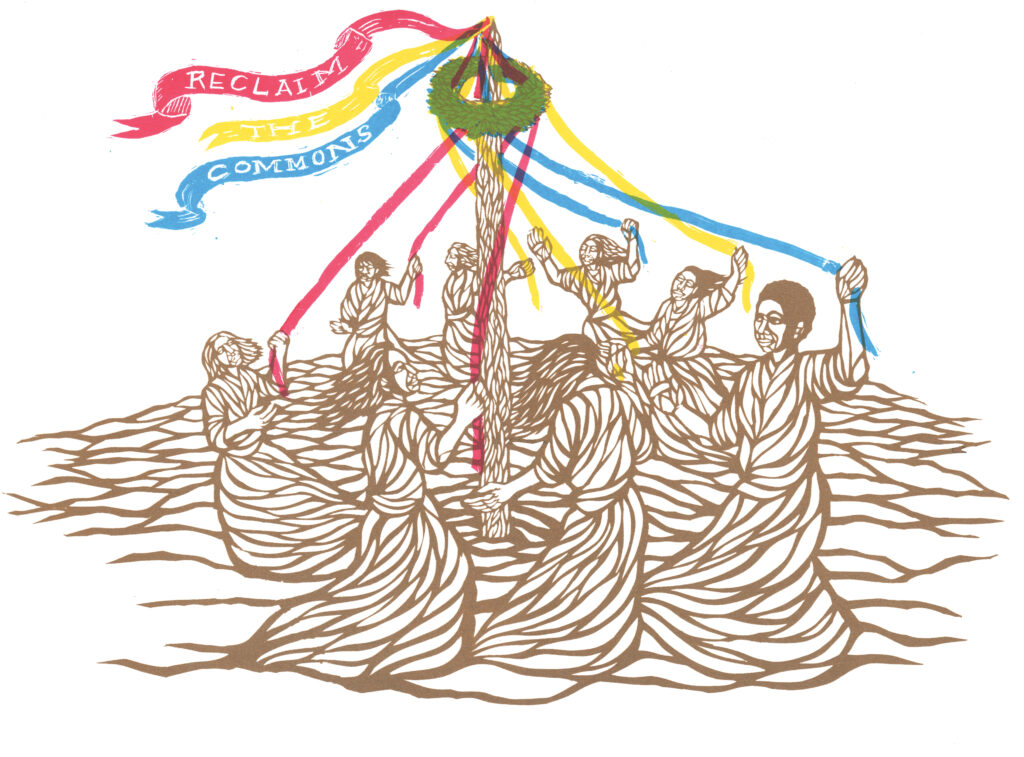
The commons is meant to be a place where everyone can gather, whatever the purpose—be it a necessary refuge or a chosen place to recreate. Too often, it feels like unhoused people are not considered part of the public. As though much of the public wants us to be completely excluded from the commons, just because we have no choice but to call them our home.
Amber Whitson is an activist, writer, advocate, and survivor. She is not going anywhere anytime soon.