In response to a recent phishing scam, Oakland’s Universal Basic Mobility pilot program—which offers prepaid transit cards to low-income residents in West Oakland—will no longer distribute cards by mail and instead require recipients to pick up cards in person.
The new policy, introduced October 15, comes as the city receives $450,000 in state funds to expand the program in 2026. Part of a broader initiative that includes bus stop upgrades and pedestrian safety projects, the program is intended to reduce public transportation costs and reduce car dependence in underserved areas of Oakland. According to city data, the West Oakland pilot has distributed 1,519 cards since its launch in March 2024.
But transportation advocates are worried about the new in-person policy, saying the requirement could limit program access to West Oakland residents who need it most.
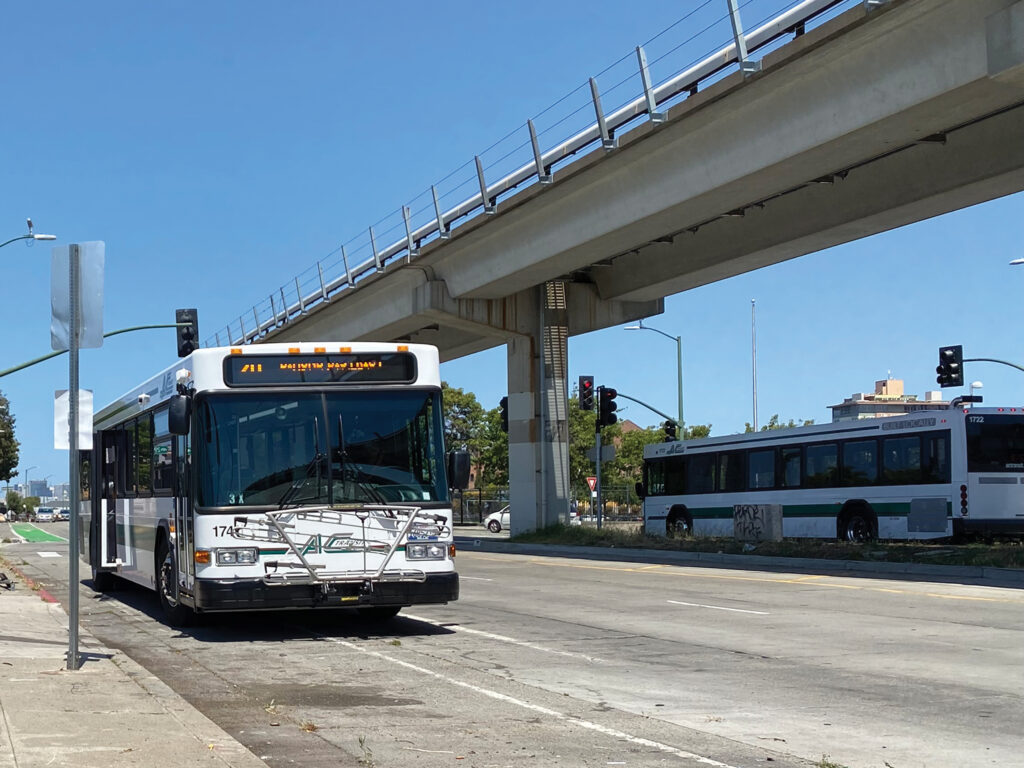
Currently, the program offers prepaid debit cards worth up to $320 for public transportation and shared mobility options, including AC Transit, BART, Bay Wheels, and e-scooter rentals from Lime and Veo. Eligible residents must live or work in West Oakland and qualify as “low income” according to 2023 area median income limits, which range from $103,550 for a single-person household to $195,250 for a family of eight. The city has not adjusted program eligibility based on 2025 income limits, which range from $111,850 to $210,950, respectively.
Previously, the city sent prepaid cards by mail, but after a recent email fraud attempt that sent phishing links to legitimate program recipients, approved residents must pick up cards in person from the city’s Parking & Mobility Assistance Center (PMAC). Pickup hours are limited to weekdays between 10AM and 2PM.
City of Oakland spokesperson Jean Walsh said that the city chose to move to an in-person process for the West Oakland pilot to add an extra layer of security and ensure the funds are going to the right person.
“The minor inconvenience of in-person pickup outweighs the risk of non-residents or bots accessing public money,” Walsh said.
Adam Cohen, a senior research manager at UC Berkeley’s Transportation Sustainability Research Center, said that strengthening security is important, but the policy change will impact eligible residents who cannot travel to PMAC during open hours.
“It also risks leaving out those with the fewest resources,” Cohen said, “People with disabilities, parents with little children, or workers who can’t take time off to travel to pickup sites.”
Cohen said officials should make key changes, including the development of regional, account-based mobility wallets, aligning fare rules and transfer discounts across all regional transit operators, and changing the way it shares resident data to make mailing cards more effective.
According to Walsh, the city is aware of potential barriers created by the policy shift, but plans to host one-off meetings in West Oakland to provide convenient access to residents with limited mobility. The city has begun partnering with local organizations—including St. Mary’s Center, Monarch Homes, St. Andrew’s Manor, and East Bay Asian Local Development Corporation at the California Hotel—to host events in the neighborhood where they’ll hand out cards to qualifying residents.
“We think the minor inconveniences this arrangement causes greatly outweigh the chance of non-Oakland residents using these cards for fraudulent purposes, which they have tried to do,” Walsh said.
However, attempted fraud isn’t the only hurdle for the program—administrative constraints and lack of community outreach have also limited the pilot’s effectiveness.
During a similar pilot in East Oakland between 2017 and 2021, only 156 out of 592 transit cards, or 26 percent, were activated by program recipients. According to the city’s 2022 Universal Basic Mobility Pilot evaluation report, privacy restrictions prevented the city from printing names or program details on the envelopes, and many East Oakland residents mistook the cards for junk mail.
As the Universal Basic Mobility program nears its planned citywide expansion, city officials hope that requiring in-person pickup and hosting neighborhood distribution events will increase participation and build trust among residents who would benefit from the program.
“Meeting residents in person,” Walsh said, “allows us to verify eligibility, guide them through activation, and make sure they can start using their cards right away.”
Laurata Pechuqui is a reporter and documentarian at UC Berkeley Journalism.