
Disclaimer: Robbie Powelson works with the California Homeless Union, which appeared in support of plaintiffs in both Vallejo cases.
Members of the Vallejo Homeless Union (VHU) have recently won their second legal victory against the City of Vallejo, temporarily halting police raids of union members’ campsites. In the rapidly changing legal landscape of the post-Grants Pass era, these two cases may serve as a blueprint for future cases that are argued in defense of unhoused individuals throughout the United States.
Last year’s Supreme Court ruling in Grants Pass v. Johnson allowed cities to criminalize acts of survival by people experiencing homelessness, holding that “cruel and unusual punishment” under the Eighth Amendment does not protect individuals from eviction or arrest, even if alternative shelter is not available. However, the decision left other legal protections intact, including “state-created danger” under the Fourteenth Amendment and the right to accommodations under the Americans with Disabilities Act (ADA).
Since the Grants Pass decision, members of the VHU have brought two lawsuits asserting those remaining legal rights.
In February, VHU member Evelyn Alfred obtained a preliminary injunction to halt the abatement of her encampment. After filing the lawsuit without an attorney, Ms. Alfred obtained a temporary restraining order (TRO) and retained attorneys to continue the case to a more permanent injunction. Ultimately, the court found that the proposed eviction, in the absence of alternative shelter and in light of Ms. Alfred’s serious medical condition, could violate the Fourteenth Amendment’s State-Created Danger Doctrine. It was the first federal injunction to halt an encampment sweep since the Supreme Court’s ruling.
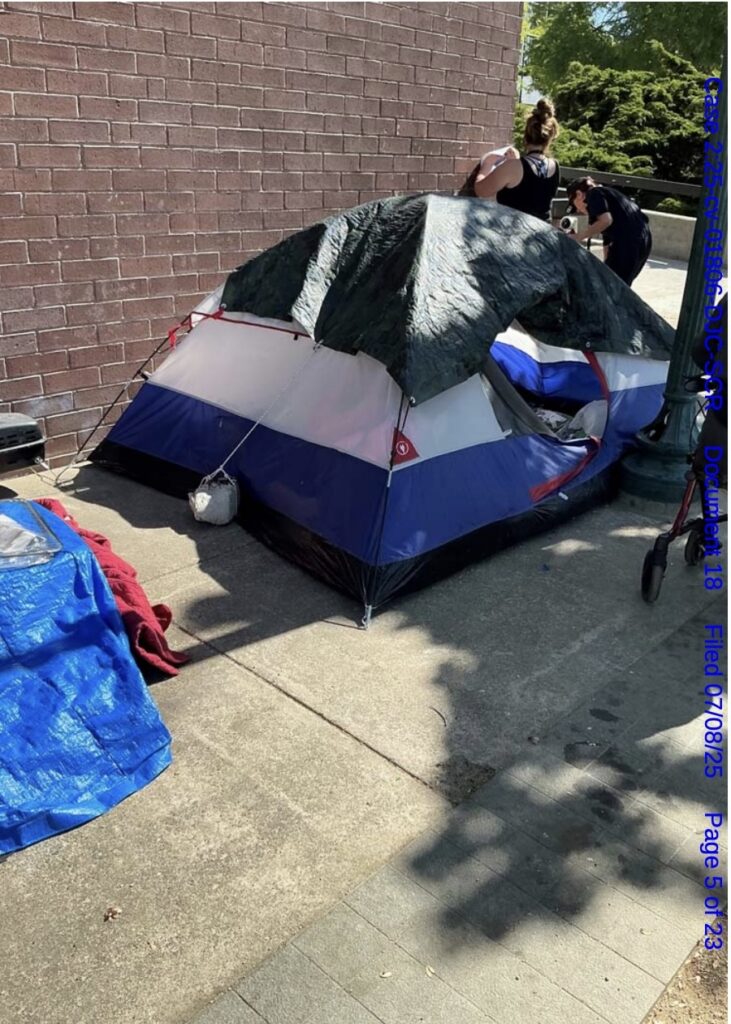
Now, a second case is underway. On June 27, a group of encampment residents living near Vallejo’s John F. Kennedy Library filed for a TRO against the city, who had posted an eviction notice at the site the day before. Plaintiffs had also filed their case and application for restraining order without the assistance of an attorney.
The conflict traces back to May 22, when the city posted initial eviction notices at the library site. On May 27, several residents submitted disability accommodation requests under the ADA, which requires public entities to make reasonable modifications unless the request imposes an undue burden or fundamentally alters a service or program. In general, ADA accommodations require dialogue between the parties to resolve the request, but in this case, the city did not engage in further communication.
After a pause, the city reposted eviction notices on June 26. The next day, four residents filed for a TRO, arguing that eviction would pose foreseeable risks to their health and safety under the State-Created Danger Doctrine and would disproportionately affect individuals with disabilities, in violation of the ADA.
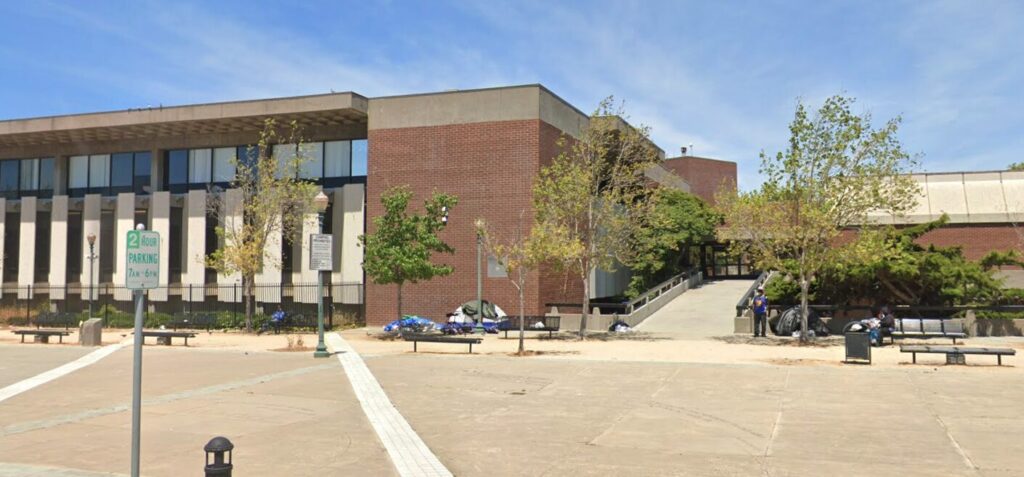
According to court filings, residents of the library encampment have no viable shelter alternatives. One plaintiff, a mother with two children, cannot enter the local emergency shelter because minors are not permitted, and family shelters have no openings. Another plaintiff, a man with HIV/AIDS, cannot safely stay in congregate shelters due to the lack of airborne disease controls and testing. The plaintiffs instead rely on the public library for bathrooms, water, and a level of safety afforded by the presence of security staff.
In its opposition to the TRO, the city argued that it waited to act until a new shelter facility—the Vallejo Navigation Center—opened on June 23. However, the Navigation Center does not accept minors and lacks airborne disease precautions, rendering it an unsuitable shelter alternative for the plaintiffs.
On June 27, U.S. District Judge Daniel J. Calabretta issued a TRO blocking the City of Vallejo from evicting the plaintiffs from the library encampment. The TRO expired on July 25 after Judge Calabretta ruled against the plaintiff’s motion for a preliminary injunction, but noted that the city must provide at least 72-hour notice before conducting a sweep at the location.
Regardless of the lawsuit’s outcomes, and especially following Grants Pass v. Johnson, the lawsuits in Vallejo highlight the ongoing role of courts in determining the boundaries of legal protections for unhoused people. The Supreme Court may have narrowed Eighth Amendment protections for those living unhoused, but other avenues remain under constitutional and statutory law. These two cases illustrate how local governments must still comply with the ADA and other constitutional rights when responding to homelessness, and demonstrate how unhoused individuals may continue to rely on the courts to assert those protections.
Notably, these cases also demonstrate a growing trend in local court filings—unhoused people taking matters into their own hands. Both Vallejo lawsuits were initially filed without attorneys, which have successfully resulted in limited TROs against police raids on encampments. Vallejo’s unhoused residents are not alone in taking up the task of filing court cases in defense of their rights. Lawsuits filed against the City of Berkeley have also postponed eviction operations at a number of encampments, and dozens of the city’s unhoused residents have joined the Berkeley Homeless Union to organize in defense of their rights.
Robbie Powelson is a California-based homeless advocate involved in civil rights litigation on behalf of unhoused individuals throughout the state.