
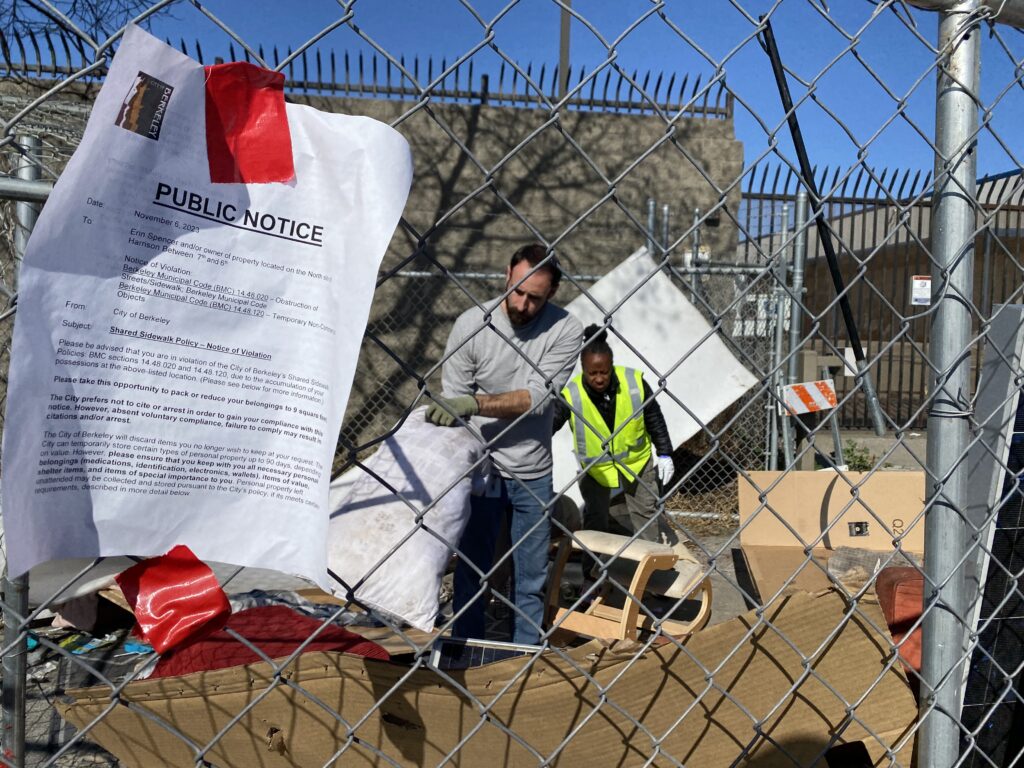
Berkeley’s Homeless Response Team (HRT) could benefit from improved coordination practices, data collection methods, and transparency measures, according to a new report from the City Auditor’s office.
Established by Berkeley City Council in June 2021, the HRT is an interdepartmental team operated by the City Manager’s Office in partnership with several departments and divisions, including Health, Housing and Community Services; Parks, Recreation and Waterfront; Public Works; Police; Fire; and the City Attorney’s Office.
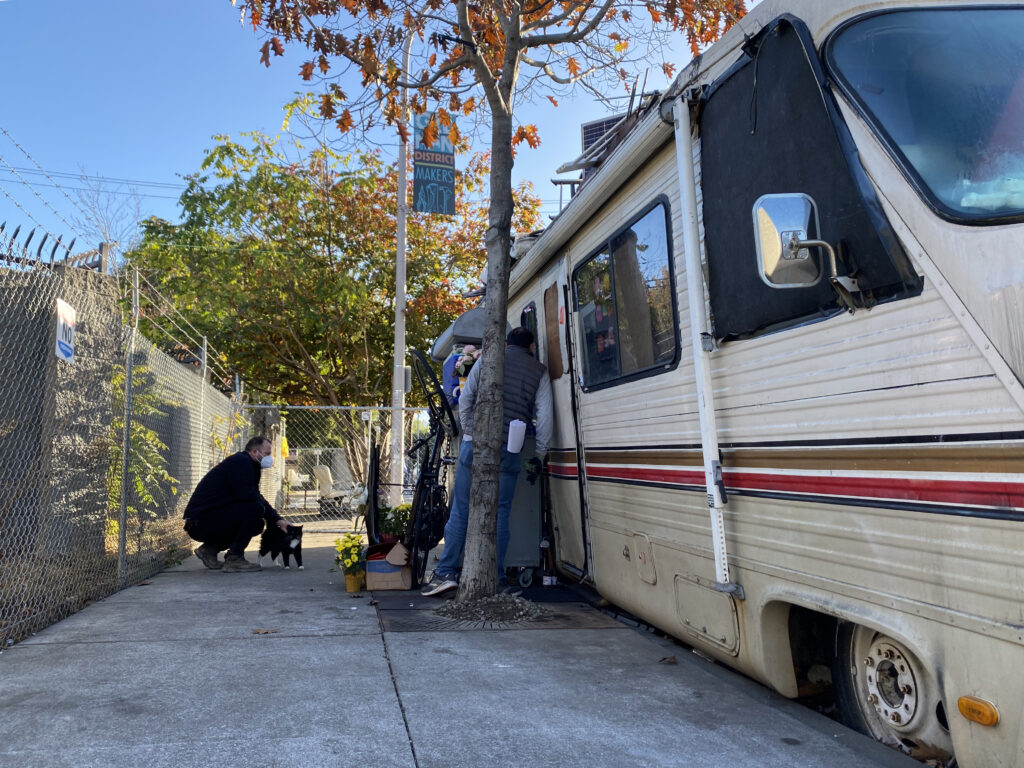
The team is tasked with carrying out a range of actions to address unsheltered homelessness in Berkeley, including outreach efforts (such as shelter and housing referrals, providing on-site dumpsters, and sanitary services) and enforcement operations (including public noticing of municipal code violations, deep cleaning of encampments, and closure operations).
HRT operations are just one arm of Berkeley’s multimillion-dollar effort to address homelessness, which also includes homelessness prevention programs, leasing and management of non-congregate shelter sites, and funding for permanent supportive housing projects. According to the City Manager’s Office, the city spent $35 million on homelessness-related activities in fiscal year 2024, $1.1 million of which was allocated to HRT expenses with the exception of staff salaries, which are paid from the city’s general fund.
By the numbers, the city’s efforts appear to be working—particularly when it comes to decreasing the city’s unsheltered population. According to the latest Alameda County PIT count data—a biannual homelessness census—unsheltered homelessness in Berkeley (defined by those sleeping in vehicles, makeshift shelters, or on the sidewalk) has decreased by 45 percent over the past few years. In 2024, Berkeley reported 445 unsheltered residents within city limits, a sharp decline from 803 in 2022.
But Berkeley’s decline in unsheltered homelessness still stands in stark contrast with its current shelter capacity. According to the HRT audit report, a total of 844 Berkeley residents experienced homelessness on any given night as of January 2024, but as of August that same year, the city hosts a total of 320 shelter beds. By these numbers, there are more than two times as many people experiencing homelessness in Berkeley as there are shelter beds.
According to the report, the primary goal of the HRT is to address the “visible symptoms” of homelessness in Berkeley rather than solve the crisis outright, and it acknowledges that encampments will continue to exist unless sufficient resources are made available to both prevent and remediate unsheltered homelessness throughout Alameda County.
However, the report identified a number of areas of improvement for the HRT. After reviewing HRT operations between July 1, 2021 and June 30, 2024, the city auditor issued three core recommendations, including better communication with service providers, better data collection methods, and making their reported outcomes more accessible to the public.
Improved Coordination and Data Collection Methods
In its outreach to unhoused residents of Berkeley, the HRT often coordinates with medical providers, behavioral health providers, homeless advocates, shelter staff, and other organizations. But during the audit period, the HRT paused weekly case conference meetings with service providers for over a year, citing a lawsuit filed against the City of Berkeley over an encampment closure.
However, during the year-long lapse in coordination meetings, the HRT continued encampment evictions in other areas of Berkeley. Limited information sharing from the HRT during this time resulted in service providers losing track of clients and restricted the exchange of crucial case information that could have improved service connections for clients facing encampment eviction.
Case conferences continued in September 2024, but the audit found that the HRT has no written procedures for communicating with service providers, including no formal coordination structures that would define the roles and responsibilities of service providers.
Moreover, the HRT had limited access to Alameda County’s Homeless Management Information System (HMIS) until December 2022, a database that allows multiple organizations to securely access critical information such as Coordinated Entry assessments, past program enrollments, and notes from care providers. Without access to the HMIS portal—which is mandated by HUD for organizations doing this kind of work—the HRT stored most of their data on Excel spreadsheets, which were not readily accessible to service providers and made it difficult for the HRT to connect unhoused residents with appropriate resources.
Internal data from the HRT’s Excel database was also lacking compared to HMIS database standards, including details like tent and structure counts in an encampment, the number of people living in an encampment, and the number of housing referrals filed on behalf of unsheltered residents. Most of the city’s data has since been transitioned to the HMIS database, but the auditor noted they did not review any HRT procedures that detail what information will be collected moving forward.
To avoid future lapses in communication with other organizations, the report recommends the HRT meet with service providers regularly and develop a coordination structure to define their respective roles during encampment operations. Inconsistencies in data could benefit from standardized collection procedures that are regularly reviewed for accuracy, and developing plans to address gaps in data sharing with service providers. To achieve this goal, the report recommends the HRT initiates a full transition to the county’s “Outreach module,” a map-based database that allows providers to easily record and view HMIS client profiles across multiple encampment locations.
Increased Transparency
From its inception in 2021, the HRT’s work in encampments has been guided by three goals: reduce unsheltered homelessness, mitigate dangerous encampments, and maintain a clean city. But reported outcomes during the audit period—submitted to Berkeley City Council in cumulative numbers rather than standardized quarterly reports—made it difficult to evaluate progress of HRT operations over a nearly three-year span.
The HRT did submit outcome data such as the number of notices posted at encampments, shelter offers made, and pounds of debris removed from city streets. But additional metrics such as verified shelter enrollment, reasons for declining shelter, and demographic data were not included, which could help identify barriers to providing care.
According to the audit, additional data is crucial for tracking the HRT’s progress and overall support of the city’s most vulnerable unhoused residents. Tracking individuals who fear gender-based violence in congregate shelter settings, or those who need ADA accommodations before accepting a shelter offer, could be the difference in whether they are provided with adequate resources.
HRT data from the audit period was also inaccessible, according to the assessment. Reports were published in two different places on the City of Berkeley website without a central landing page, making it difficult for city officials, oversight bodies such as Berkeley’s Homeless Panel of Experts, and members of the public to track outcomes of HRT operations and overall success of program goals. In 2022, the HRT had started developing a public-facing dashboard that included data such as shelter enrollments, program exits, and exit destinations, but ultimately put the project on hold.
To more effectively measure its impact, the report recommends the HRT track more detailed data during their outreach, such as shelter enrollments, demographic breakdowns, and reasons why individuals decline shelter offers.
The audit also suggests that reports are published regularly to easily track progress, and data should be made accessible to the public through a central landing page or dashboard.
HRT Responds, Offers Corrective Plans
The HRT and city management were provided a draft of the audit before the report was published on July 16, and agreed with its findings, conclusions, and recommendations. Expected to implement audit recommendations within two years, the HRT has committed to corrective action plans for each suggestion, which the city auditor will track as part of its standard follow-up process.
Implementation dates for all recommendations were set for August or September 2025—with the exception of a full transition to the HMIS Outreach module, which the HRT claims will begin in August 2028 due to current service contracts.
Read the full report online here.
Bradley Penner is the Editor and Lead Reporter of Street Spirit.